What Is Coastal Chic Interior Design? (And How to Get the Look)
Last updated on July 30th, 2026
Coastal chic is a refined approach to coastal interior design that replaces nautical motifs, bright blues, and beach-house kitsch with natural textures, warm neutrals, and a relaxed sense of luxury. Think Malibu cliffside, not Cape Cod cottage. The look works whether you live a block from the ocean or a thousand miles inland.
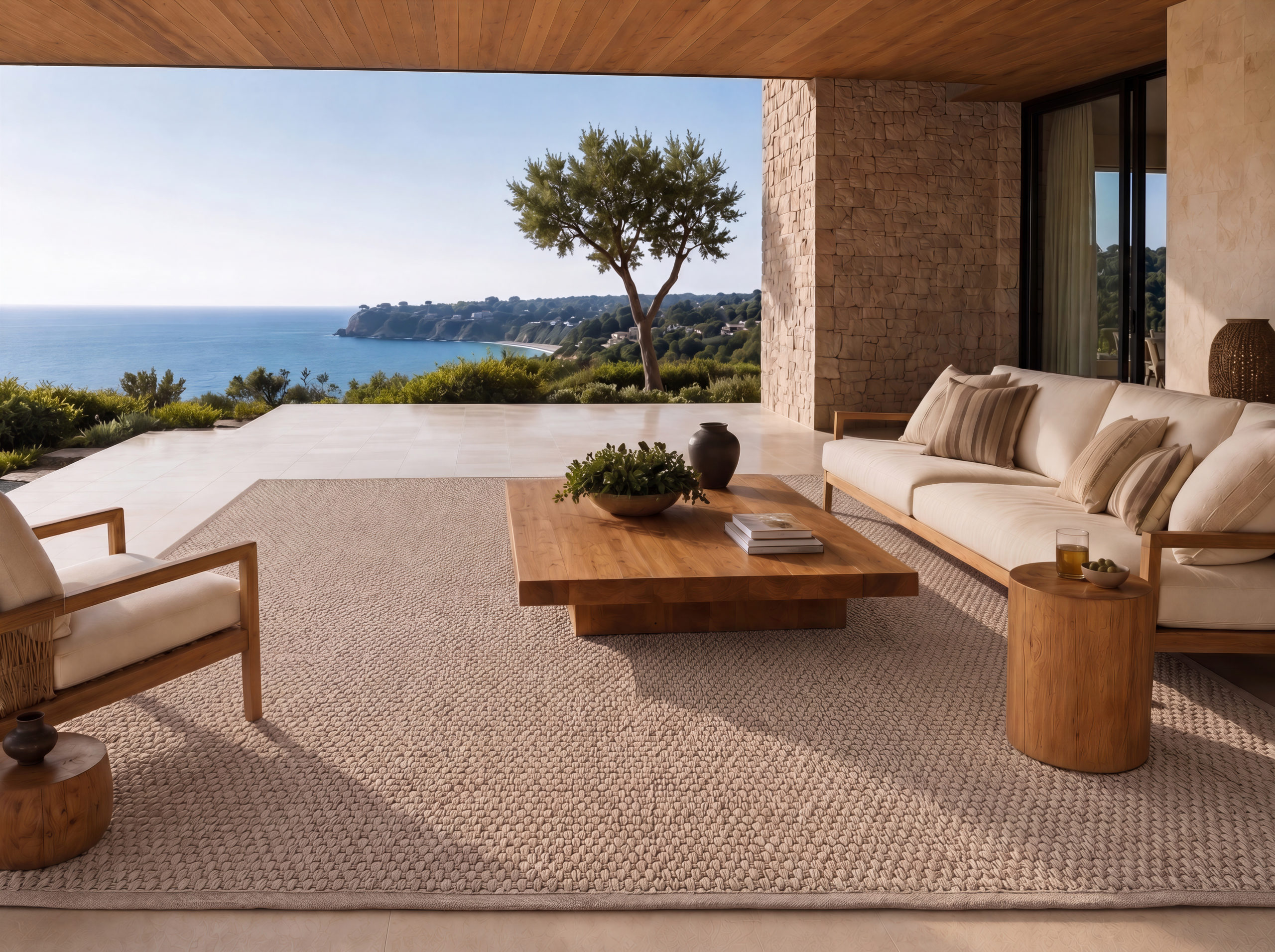
You have probably seen it without knowing the name. Linen sofas the color of sea oats. A jute rug covering most of the living room floor. A live-edge coffee table that looks like it washed ashore. Sheer curtains pooling in a sunlit room. This is modern coastal decor at its most considered and it is one of the most enduring interior aesthetics of the last decade.
What makes coastal chic different from traditional beach decor?
The distinction is easy to miss until you see the two styles side by side.
Traditional coastal decor borrows from nautical imagery: navy and white stripes, rope accents, anchor motifs, painted driftwood. It signals the ocean loudly. Coastal chic does the opposite: the sea is an implied backdrop, not the decorating scheme.
Where beach-house style leans into pattern and color contrast, coastal chic leans into texture and restraint. The palette stays narrow. Furniture is oversized and low-profile. Every material feels like it came from the natural world: wool, jute, sisal, linen, travertine, white oak. The room is calm. That calm is the point.
This distinction matters before you shop. A search for ‘coastal rug’ will return results that are very different from what actually belongs in a coastal chic interior. The wrong rug (too patterned, too bright, too blue) undoes every other decision in the room.
What colors define the coastal chic palette?
The palette is deliberately narrow, and that restraint is what makes the rooms feel elevated.
The foundation is warm whites, soft ivories, and sandy beiges. Limestone, bone, oatmeal, flax: these tones echo the colors you would actually see looking at a coastline: bleached sand, sun-dried grasses, pale rock faces. Walls and large upholstered pieces stay in this range.
Wood tones carry the warmth. Natural white oak, driftwood oak, weathered teak, and light walnut show up as flooring, furniture frames, and ceiling beams. The grain and texture do the visual work that pattern would do in a busier room. Accent colors are used sparingly. Sea-glass blue, muted aqua, soft sage, and warm stone gray might appear in a rug, a piece of art, or a cluster of ceramic vessels.
What is absent matters as much as what is present. Cool grays, stark white, jewel tones, high-gloss finishes, and strong black contrasts all break the spell. The palette should feel like the warmth of a long summer afternoon, not a brochure for a beach rental.
What rug materials work best in a coastal chic interior?
The rug is the most consequential material decision in a coastal chic room. The brief is consistent: texture over pattern, natural fiber wherever possible, and scale generous enough to anchor all the furniture. Here is how each material category fits the look.
Jute and natural fiber
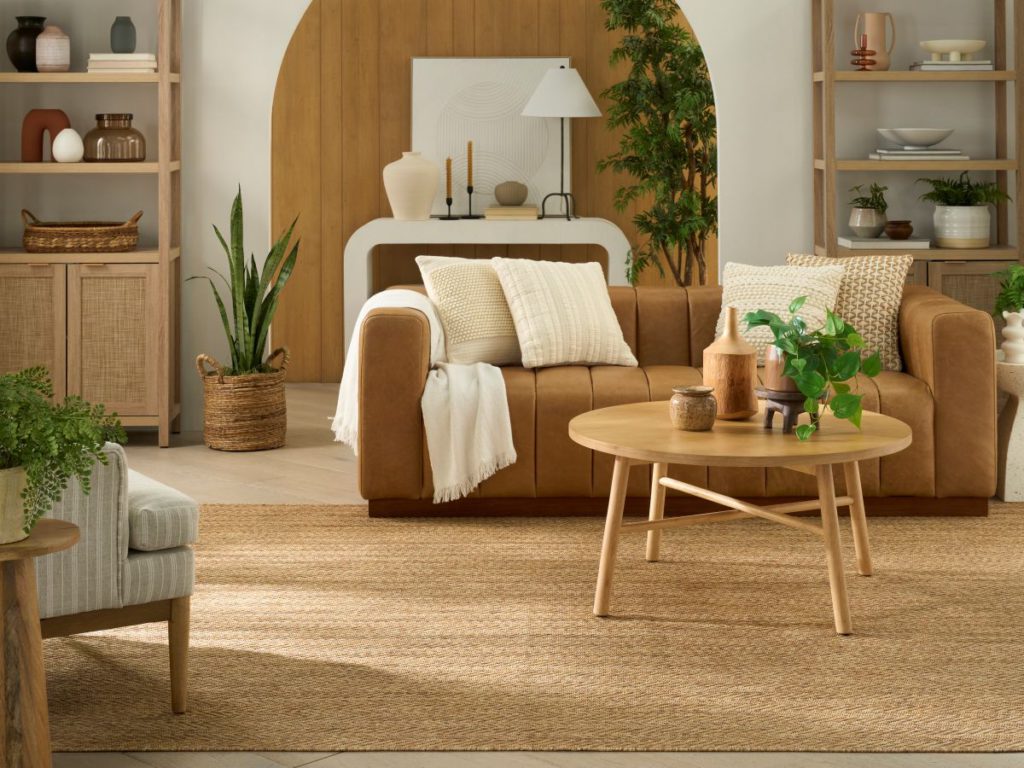
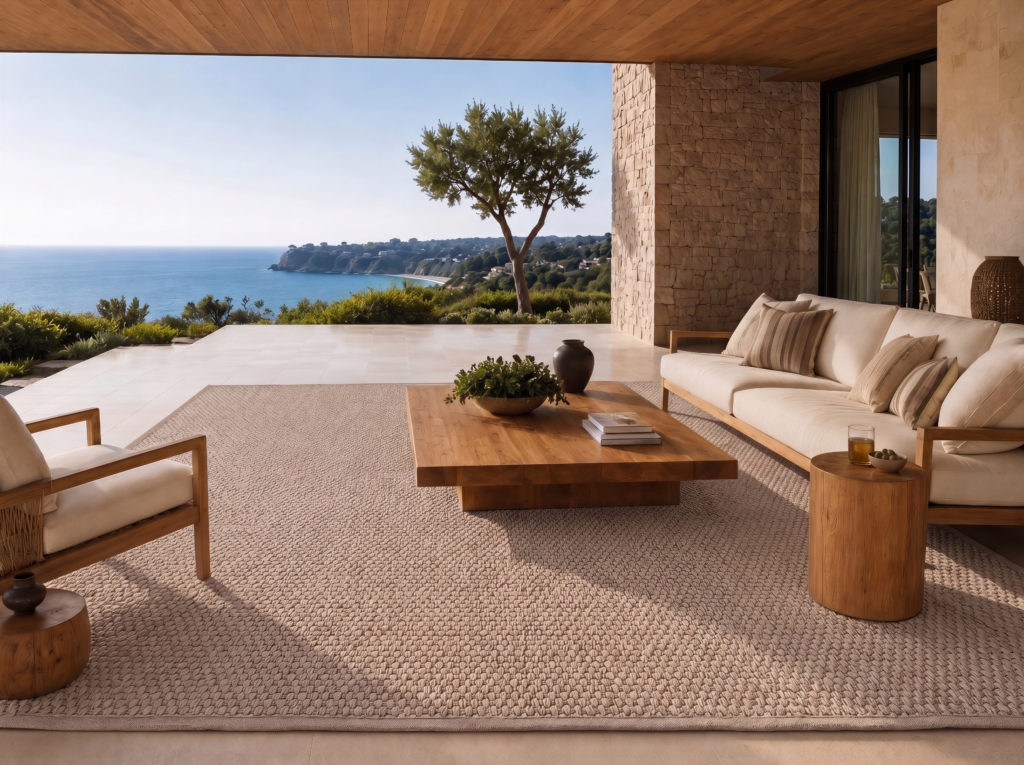
Jute is the most recognizable material in coastal chic interiors. As a plant fiber, it carries a naturally sandy, warm color that reads as an extension of the floor rather than a decorating decision. It adds organic texture without introducing visual noise. The Natural Jute NJT03 is handwoven from 100% jute fiber in a flat-weave construction, keeping the profile low and the texture tight. It suits living rooms and dining rooms in homes with moderate foot traffic, and it is the closest thing to a default choice for the style.

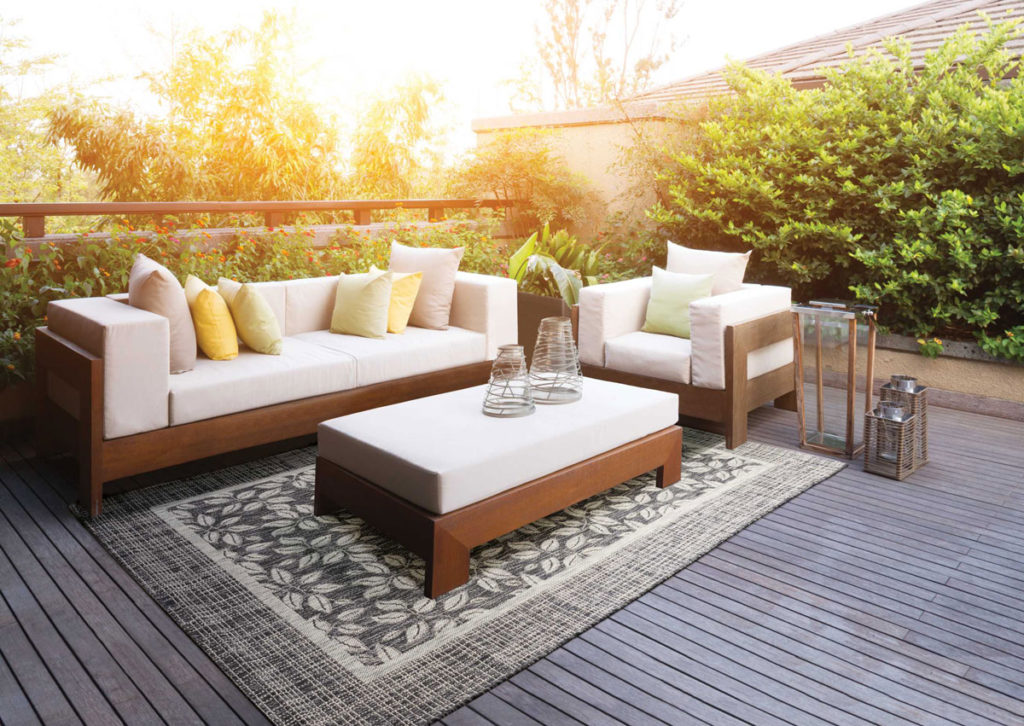
For outdoor terraces and covered transition spaces (the indoor/outdoor zones that define coastal chic architecture) natural jute is not the right call. Those spaces need UV and moisture resistance. The Wherever Sisal WHVSI in Dune is constructed from 100% UV-stabilized polypropylene in a hand-loomed weave that mimics sisal’s structure and color. It resists fading under direct sun exposure and dries quickly after coastal humidity or rain, making it the right choice for any space where the line between inside and out is intentionally blurred.
Wool and wool blends
Where jute provides texture, wool provides softness and sculptural depth. The Avra AVR01 in Taupe is hand-tufted from 80% wool and 20% rayon with a cut-and-loop pile that renders its tonal botanical motif as shadow and texture rather than color contrast. In a coastal chic living room, you see the pattern only as depth, which is exactly right. This is the kind of rug that looks more considered than its price suggests when it is placed in the right context. Do you want to know everything about wool rugs before committing to one? Check our complete guide on wool rugs here.
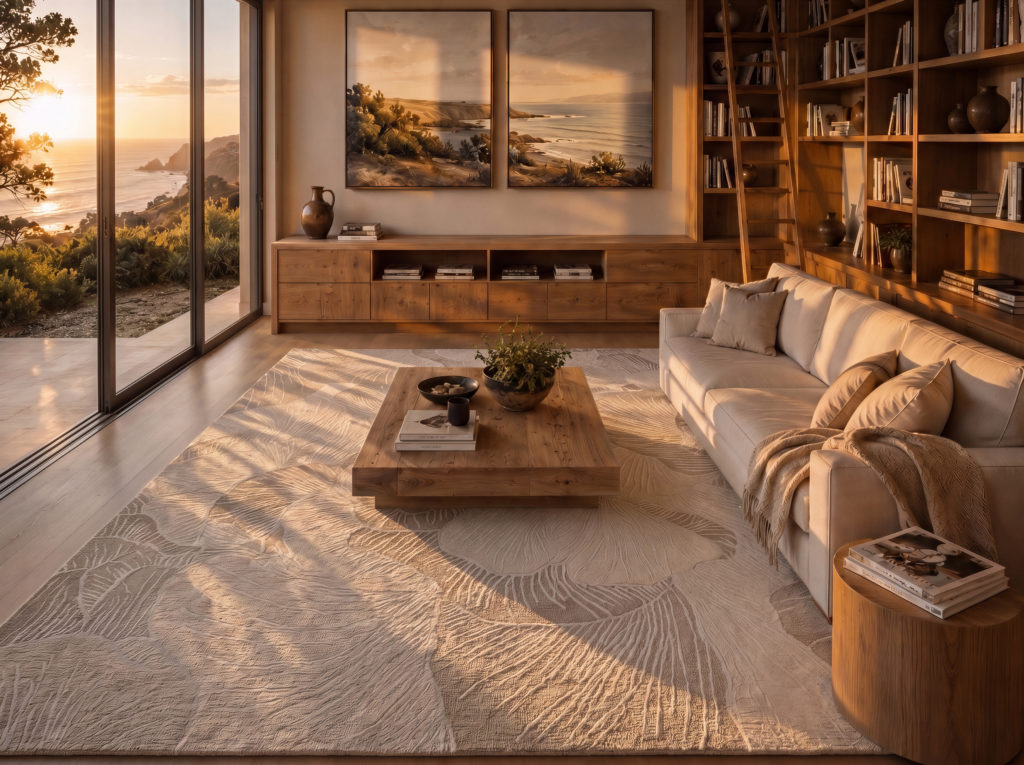
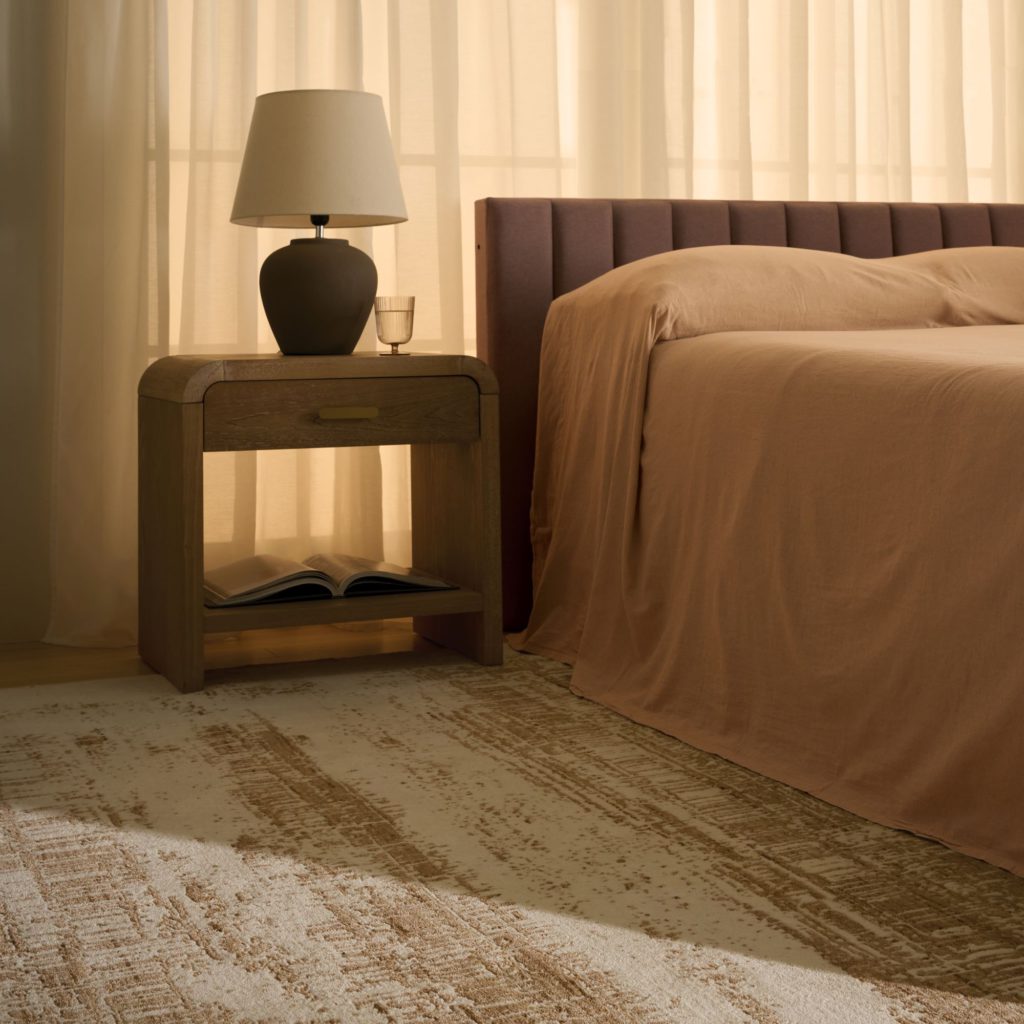
For bedrooms, the Calvin Klein Architectura ACT01 in Natural is a strong choice. Hand-loomed from 65% wool and 35% polyester with a cut-and-loop pile at a 0.236-inch height, it sits low enough to read as refined while retaining enough texture to feel intentional. In coastal chic bedrooms, the rug should extend at least 24 to 36 inches beyond the sides of the bed, with all bedside furniture sitting on it. That oversized scale creates the resort-like quality that defines the look. If you want help with choosing the right rug size, check our quick guide here.


Silk-like fiber for the dining room
The dining room is the right place to bring in a quiet accent color. The Silk Shadows SHA21 in Blue Sky is hand-knotted from 75% bamboo-extruded silk-like fiber and 25% New Zealand wool, giving it a soft luminosity that catches warm light without looking flashy. The muted blue-gray of the Blue Sky colorway functions as a sea-glass accent: present and intentional, but never competitive with the room’s natural palette. Under a rattan pendant over a solid oak dining table, it is precisely what the style calls for.


How do runners and smaller rugs fit into coastal chic interiors?
Runners are easy to overlook in a style conversation, but they do real work in coastal chic homes. Kitchens and hallways are where a runner’s function and its aesthetic contribution are equally important. The Calvin Klein CK33 Mesa in Amber is a flatweave runner with a warm, earthy tone that layers naturally over light oak cabinetry and travertine-look tile floors. In a coastal kitchen with stone countertops and floor-to-ceiling windows, it grounds the space without competing with any of the other materials in the room.


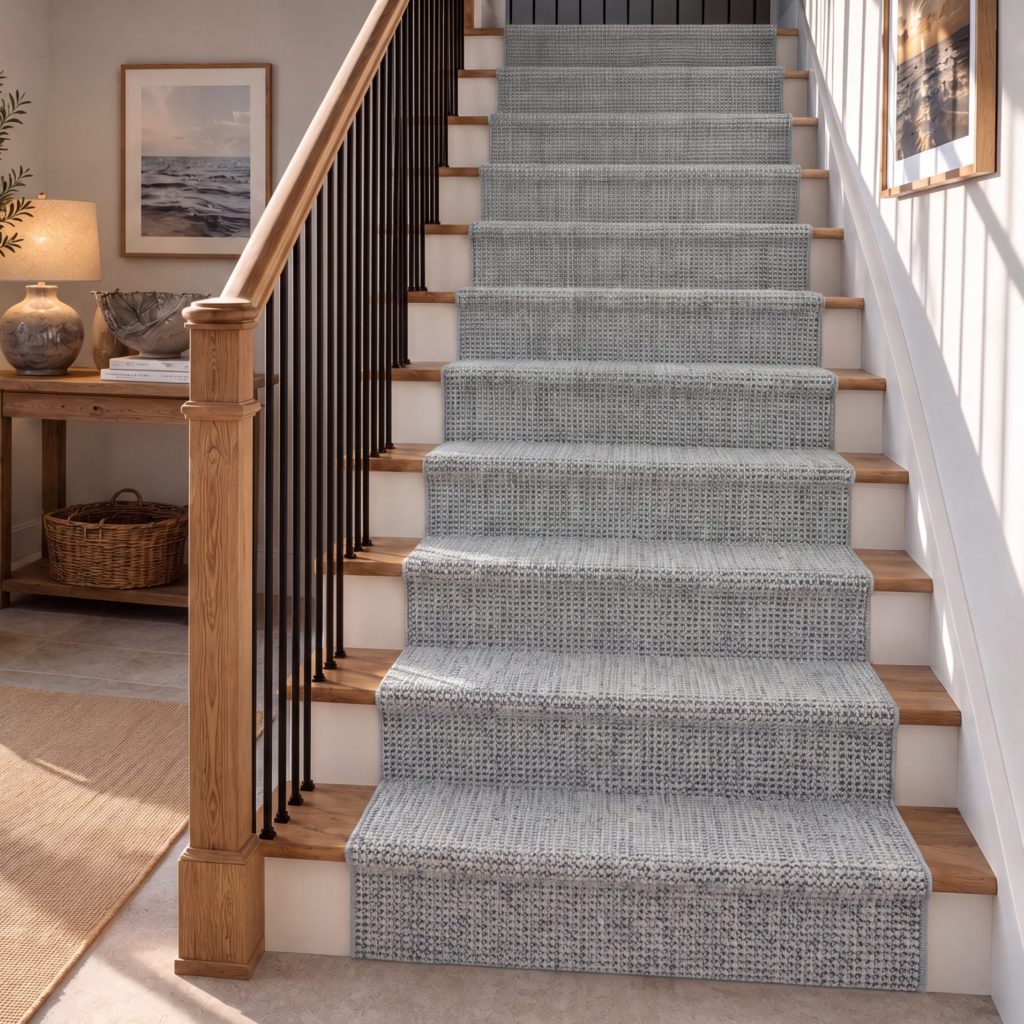
For stairways and entry halls, the Samba Placid Custom broadloom offers a more architectural solution. Cut and bound to the width of each tread, a broadloom stair runner has a tailored, built-in quality that a standard runner rug cannot replicate; the carpet meets the riser cleanly, the edges are finished to spec, and the installation reads as part of the architecture rather than something placed on top of it. In a coastal chic home, where the goal is always for materials to feel considered rather than decorative, that distinction matters.
Can you bring coastal chic into a home that isn’t on the coast?
Yes, and this is where the style’s real versatility becomes clear.
Coastal chic does not require an ocean view. It requires a commitment to the palette, the materials, and the scale. A landlocked home with warm white walls, white oak flooring, a linen sofa, a generous jute rug, and sheer window treatments already has the bones of the aesthetic. The ocean is a reference point, not a requirement.
The one mistake that breaks the illusion is over-decorating. Coastal chic is a subtractive style. Every room should have fewer objects than you think it needs. A seascape painting or coastal photography is appropriate. A collection of anchor figurines and rope-wrapped mirrors is not. The goal is to feel like the coast, not to display evidence of having been there.
Natural light amplifies everything. If your home does not face water, orient the furniture toward your best windows and keep the window treatment light-filtering rather than blackout. The warmth of late-afternoon sun on warm ivory walls reads as unmistakably coastal regardless of what is outside.
What accessories and lighting complete the coastal chic look?
The accent pieces in coastal chic interiors follow the same logic as the palette: organic forms, natural materials, warm light temperatures.
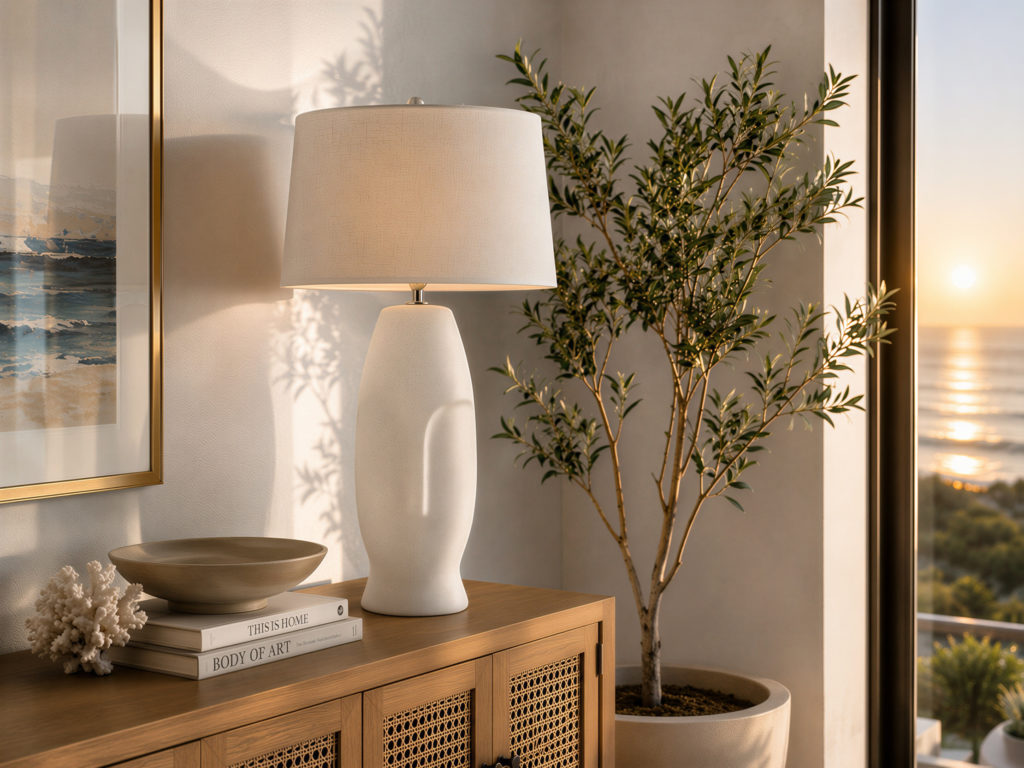
Ceramic vessels, wooden bowls, organic sculptures, and a few well-chosen books do the styling work. For lighting, the form of the fixture matters as much as its output. The IET06 Cream Ceramic Table Lamp brings an organic, hand-thrown quality to a desk or bedside surface. Its matte glaze and irregular silhouette read as a found object rather than a purchase.

The WDL05 Cream Ceramic Table Lamp takes a more sculptural approach. Its textured body and broad shade work on a sideboard or console where a single statement piece anchors the vignette. Both lamps should burn at 2,700K to 3,000K. Cool white light is the fastest way to undermine a warm coastal palette.
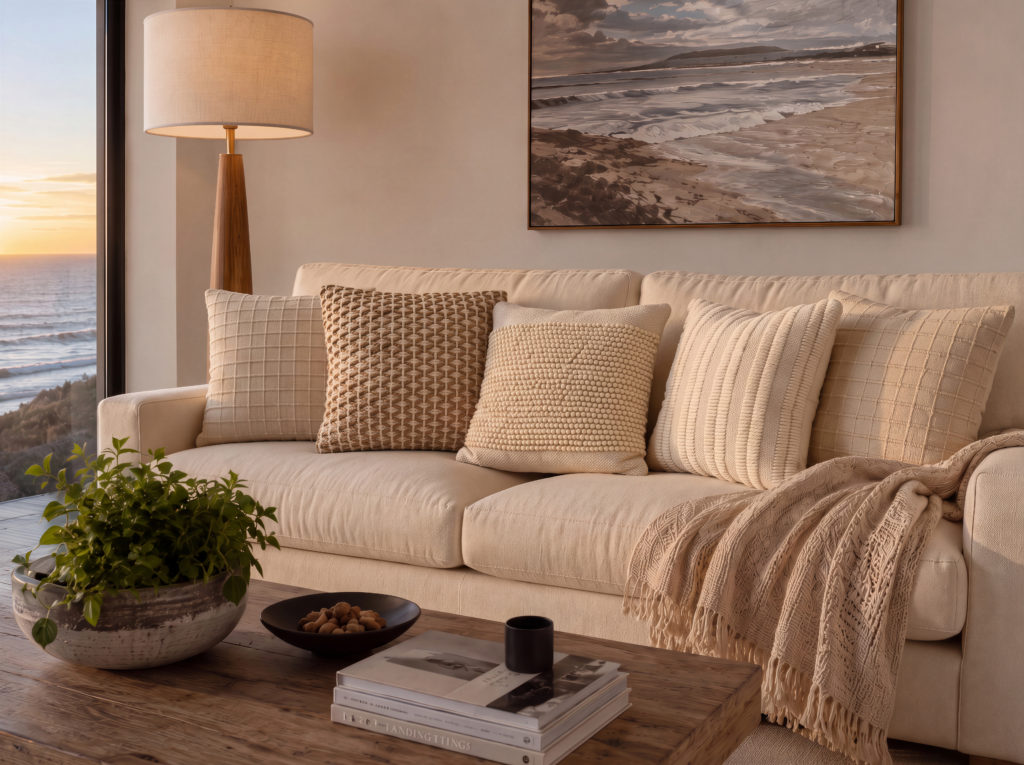
On the sofa, woven pillow covers in natural tones and basket-weave textures add the tactile dimension that coastal chic requires. The texture itself does the decorating, no print, no color, no pattern needed.
Frequently asked questions about coastal chic interior design
Q: What is coastal chic interior design?
A: Coastal chic is a refined approach to coastal decorating that replaces nautical motifs with natural textures, warm neutrals, and a relaxed sense of luxury. The palette stays narrow (warm whites, sandy beiges, soft accent tones), and every material feels organic: jute, wool, linen, white oak, travertine. It is distinguished from traditional beach-house decor by its restraint and its absence of nautical references.
Q: What is the difference between coastal chic and beach house decor?
A: Beach house decor uses nautical imagery (stripes, anchors, navy and white contrast) and leans into pattern and color. Coastal chic replaces those signals with restraint: a narrow warm palette, natural materials, oversized low-profile furniture, and no decorative references to the ocean beyond the implied atmosphere. The look is closer to a high-end Mediterranean villa than a seaside cottage.
Q: What rug materials work in a coastal chic interior?
A: Jute and sisal are the most common choices. Their natural, sandy color and flat-weave texture read as an extension of the floor rather than a decorating decision. Tonal wool cut-and-loop rugs add softness while maintaining the quiet, textural quality of the style. For outdoor or transition zones, 100% UV-stabilized polypropylene in a sisal-like weave provides the same look with weather resistance.
Q: Do I need to live near the ocean to achieve a coastal chic look?
A: No. Coastal chic is about materials and atmosphere, not geography. Warm white walls, natural fiber rugs, light-filtering window treatments, and organic accessories create the look in any home. The key is restraint: the style is subtractive, not additive. Edit down rather than add more.
Q: What colors are used in modern coastal decor? A: The foundation is warm whites, ivories, sandy beiges, and natural wood tones. Accent colors are used sparingly: sea-glass blue, muted aqua, soft sage, and warm stone gray. Cool grays, jewel tones, bright whites, and strong black contrasts are avoided. The palette should feel warm, not crisp.