Are Jute Rugs Really Durable? Honest Answers Before You Buy
Jute rugs are genuinely durable, within their limits. Made from natural plant fiber, jute handles moderate foot traffic well and can last years in the right setting. Where it struggles is moisture, high-traffic zones, and machine washing. Understanding those limits before you buy will save you from a lot of disappointment.
What Is a Jute Rug?
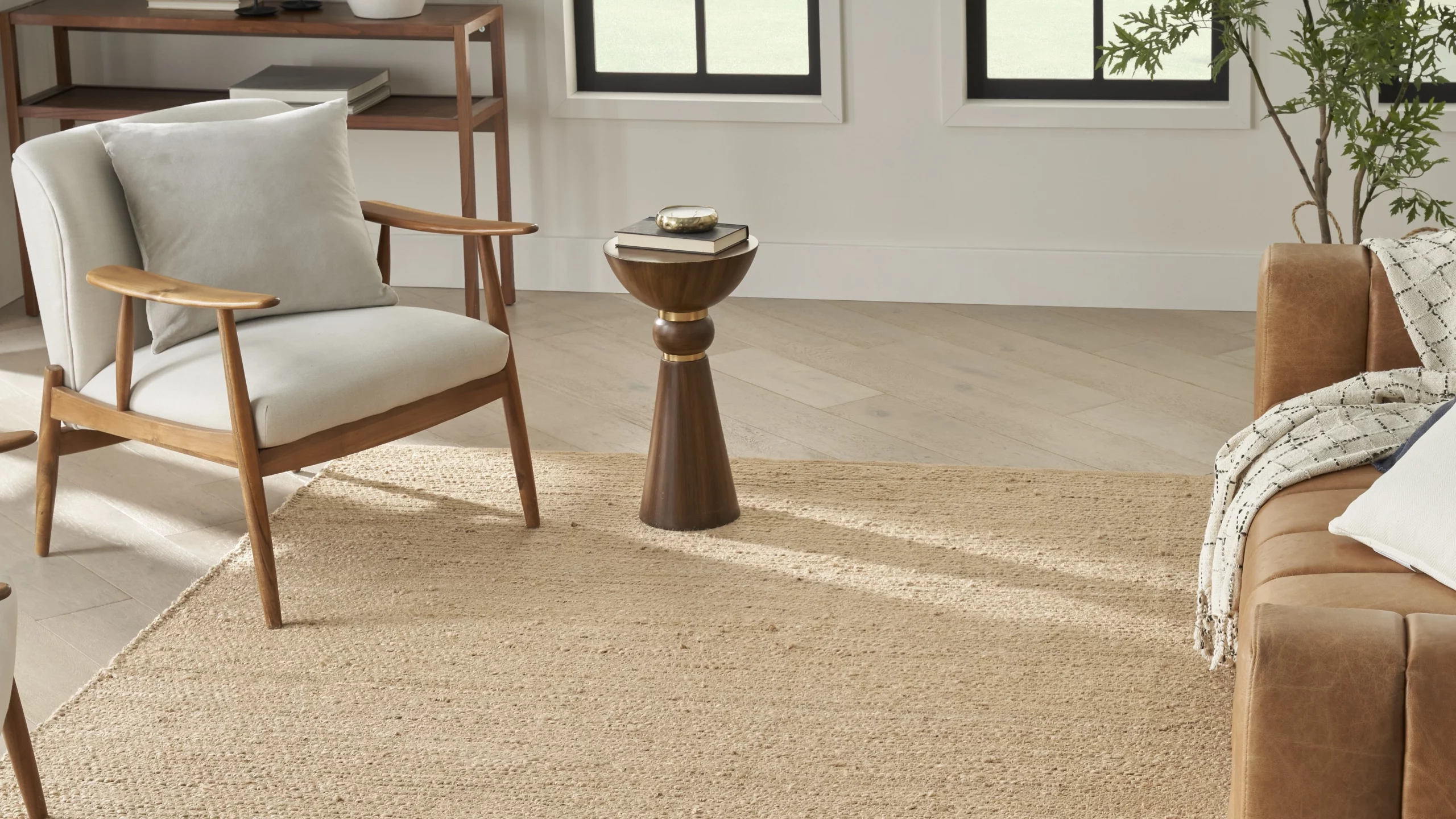
Jute is a long, soft vegetable fiber harvested from the Corchorus plant, grown primarily in India and Bangladesh. It’s one of the most affordable natural fibers in the world, which is part of why jute rugs have become a go-to in the natural home category. The fiber is spun into yarn, then typically woven flat or in a chunky braided construction. Most jute rugs range from about 1/4 inch to 3/8 inch in pile height depending on the weave.
The color range is narrow by nature. Raw jute reads as warm golden-tan, sometimes deeper in tightly woven constructions. If you want a natural fiber rug with more color flexibility, sisal or seagrass can offer a wider palette. But if the look you’re after is that warm, organic, undyed texture, jute delivers it better than almost any other fiber at its price point.
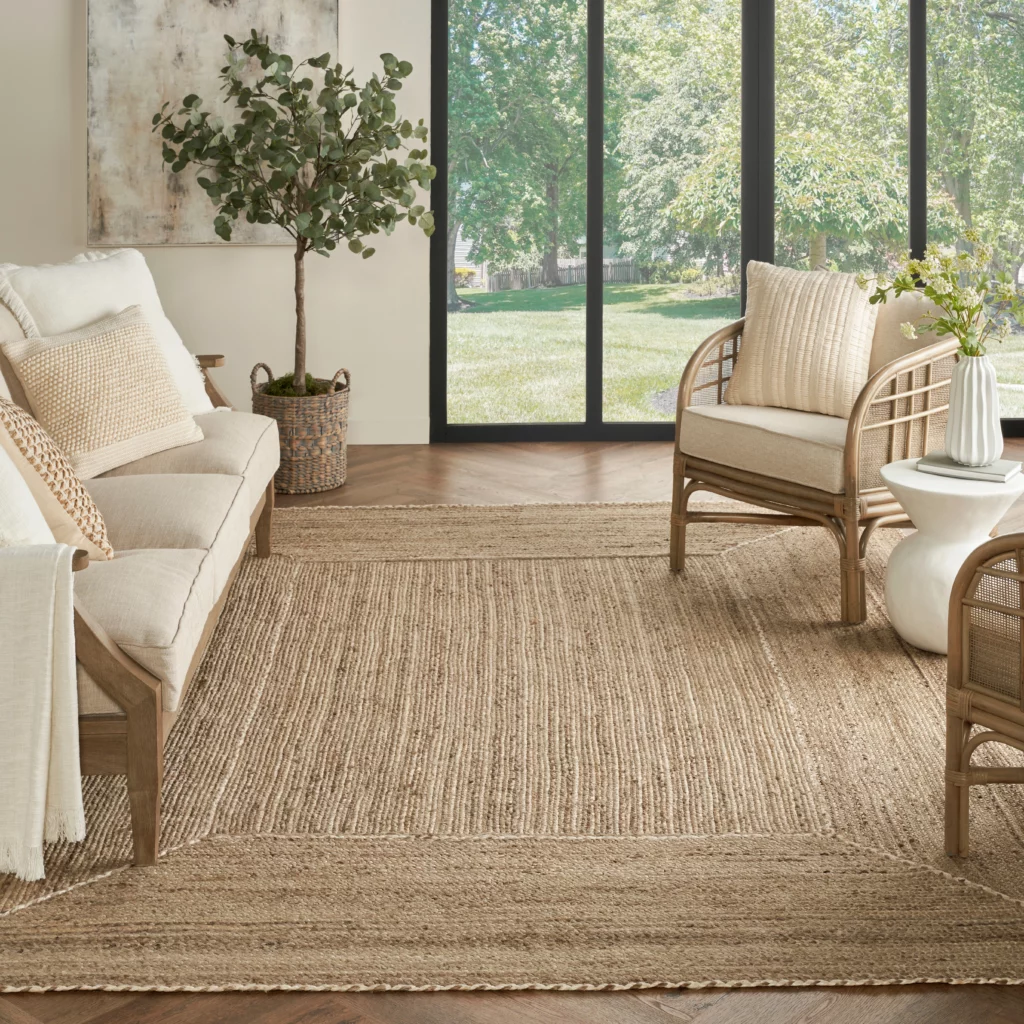
Are Jute Rugs Durable?
Yes, but the word “durable” needs context. Jute fibers are strong in tension, meaning the woven structure holds up well under regular foot traffic in living rooms, bedrooms, and dining areas. In those settings, a quality jute rug can last five to ten years before showing significant wear.
The limitation is concentrated stress. Jute does not recover from heavy furniture indentation the way wool does, and the fibers break down faster under the friction of doorway traffic or the sharp legs of chairs that are pulled in and out repeatedly. A jute rug under a dining table where chairs move every day will show wear at the stress points within a couple of years.
The fiber also weakens when wet. This is not a design flaw. It’s simply the nature of cellulose fiber. Moisture causes jute fibers to swell and, if not dried quickly, to brown, stiffen, and eventually rot from the inside out. That single fact shapes nearly every other decision you make about a jute rug.
The honest summary: Jute is durable for low-to-medium traffic on dry floors. It is not the right material for a mudroom, a kitchen, or any space where moisture is a regular factor.
Are Jute Rugs Soft?
Not particularly, and that’s worth saying plainly. Jute is coarser than wool, softer than sisal, and rougher than cotton. On bare feet, a tightly woven jute rug feels more like natural texture than cushion. Many people find that contrast pleasant, especially in warmer months when a cooler, firmer surface is welcome underfoot.
If you want a jute rug in a bedroom where you step out of bed barefoot every morning, layering it under a softer textile, a sheepskin, or a smaller cotton runner can solve the texture gap.
The softness also varies by construction. Looser, chunkier weaves tend to feel slightly softer because the fibers are twisted rather than packed flat. Tighter flatweaves will feel more rigid. Running your hand across the rug before buying it in person, or reading texture descriptions carefully when buying online, is worth the extra minute.

What About Jute Blend Rugs?
Pure jute is not your only option. A growing category of rugs combines jute with a second fiber, and depending on what that fiber is, it can meaningfully change how the rug performs, how it feels underfoot, and where you can realistically use it.
The blend ratio matters. A rug that is 80% jute and 20% cotton behaves much more like a pure jute rug than one that splits the fibers closer to 50/50. When you are reading product specs, look for the fiber breakdown, not just the mention of jute in the name.
Jute + Wool
This is the most performance-forward jute blend. Wool adds resilience that pure jute lacks: the fibers spring back after compression, which means furniture legs leave less permanent indentation, and the rug holds its shape longer under regular foot traffic. Wool also has natural lanolin content, which gives it mild moisture-wicking properties and makes the surface slightly more forgiving of light spills than pure jute.
The feel underfoot is noticeably softer. Wool’s natural crimp introduces a cushioned quality that pure jute flatweaves do not have. A jute-wool blend is a reasonable choice for a living room or bedroom where you want the natural-fiber aesthetic without sacrificing comfort completely.
Jute + Cotton
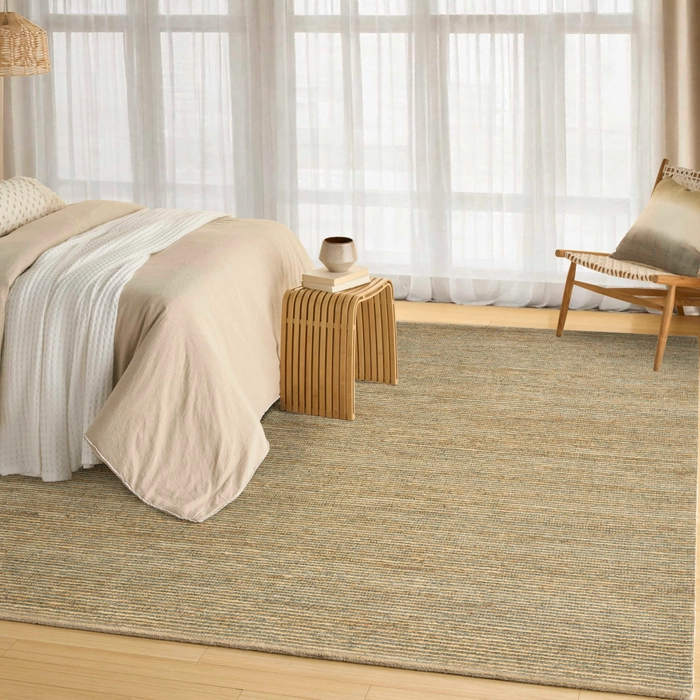
Cotton softens the hand of a jute rug considerably, making this blend the most comfortable of the common combinations underfoot. It also opens up the color range: cotton takes dye more readily than jute, so blended constructions can introduce striping, banded borders, or tonal variation that pure jute cannot.
The trade-off is that cotton does not add meaningful durability. A jute-cotton blend is softer and more visually versatile, but its moisture sensitivity is similar to pure jute. Treat spills the same way: blot immediately, keep moisture minimal, no machine washing.
Jute + Synthetic Fiber (Polyester or Polypropylene)
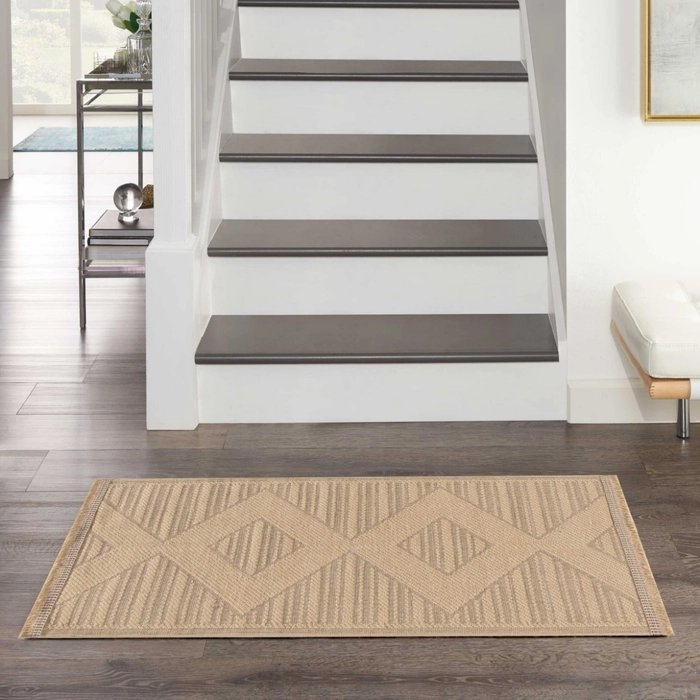
Adding a synthetic component is the most practical upgrade to jute’s core limitations. Polyester increases abrasion resistance, which extends the rug’s lifespan in moderate-traffic areas. Some jute-polypropylene blends offer a degree of moisture resistance that pure jute does not, though they are still not suitable for outdoor use or wet environments.
The natural look is slightly altered in these constructions. Synthetic fiber introduces a subtle sheen that reads differently from the matte, organic surface of pure jute. Whether that trade-off is worth it depends on how you are prioritizing performance versus aesthetics.
Jute + Viscose or Chenille
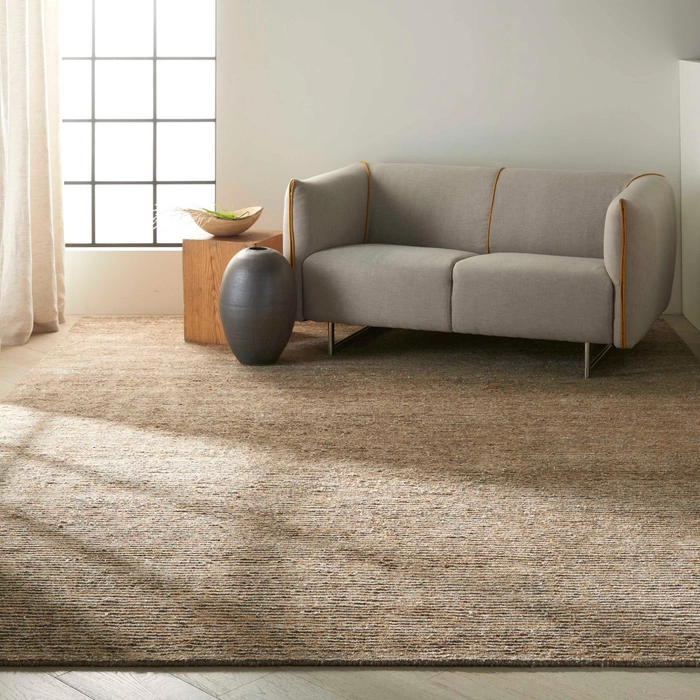
Viscose and chenille blends are the softest on this list. They prioritize texture and visual richness over durability, adding a silky or velvety quality to what would otherwise be a rough surface. These constructions tend to appear in decorative or accent rug formats rather than large area rugs.
Viscose in particular requires careful handling. It is more fragile than jute when wet and can watermark easily. A jute-viscose blend is a beautiful choice for a low-traffic bedroom or reading nook. It is not the right rug for a family room floor.
Why Choose a Blend?
The case for a jute blend comes down to this: you get the look and the natural-fiber warmth that made you consider jute in the first place, with at least one performance gap addressed.
If softness was holding you back, a jute-wool or jute-cotton construction solves it. If durability was the concern, a jute-synthetic blend extends the rug’s usable life. If you want more design options without giving up the natural-fiber base entirely, cotton blends open up the palette.
The caveat is that no blend fully overcomes jute’s moisture sensitivity. Every combination that includes jute in a meaningful percentage should still be kept away from wet environments, spot-cleaned rather than saturated, and protected with a quality rug pad. The blend improves the fiber, not the fundamental nature of the plant it comes from.
Do Jute Rugs Shed?
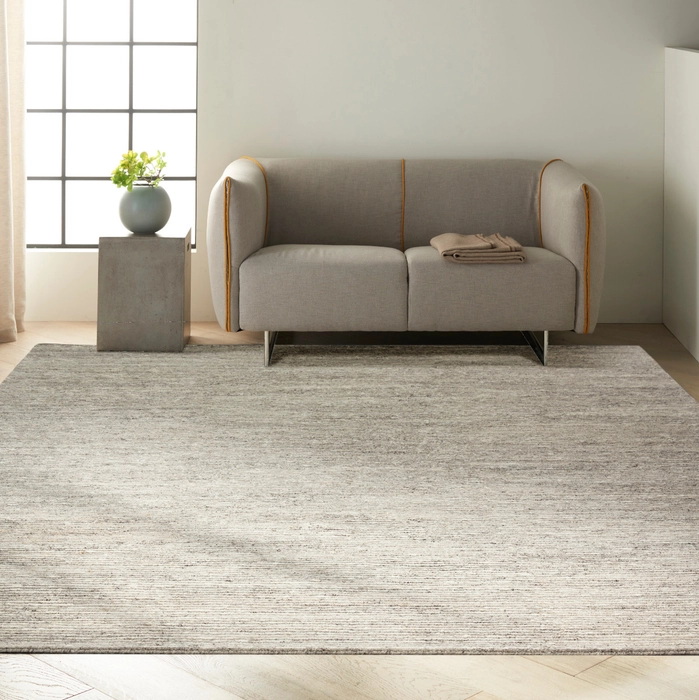
Some, yes — especially in the first few months. Loose fibers work their way out of a new jute rug as it settles, which is normal for any natural fiber rug. The shedding slows significantly after the first several vacuumings and largely stops once the rug has been in place for a few months.
The rule for vacuuming jute is low suction, no beater bar. A high-powered rotating brush head can snag the fibers, accelerate fraying at the edges, and pull the weave apart over time. Use your vacuum’s bare-floor setting or a suction-only attachment, and vacuum in the direction of the weave rather than against it.
If you’re seeing fiber loss that does not slow down after three to four months, check the backing. A jute rug with a loose or deteriorating latex backing can shed more aggressively over time. Quality jute rugs typically use a cotton or reinforced latex backing that keeps the weave stable.
Can Jute Rugs Be Used Outdoors?
No. This is one of the most common misunderstandings about natural fiber rugs, and it’s a costly one.
Jute is a moisture-sensitive cellulose fiber. Outdoors, it is exposed to humidity, dew, rainfall, and ground moisture even on covered patios. Any sustained moisture contact causes the fibers to brown and weaken. The rug will not recover once that browning has set in. UV exposure also accelerates fading and fiber degradation in a way that does not affect synthetic materials.
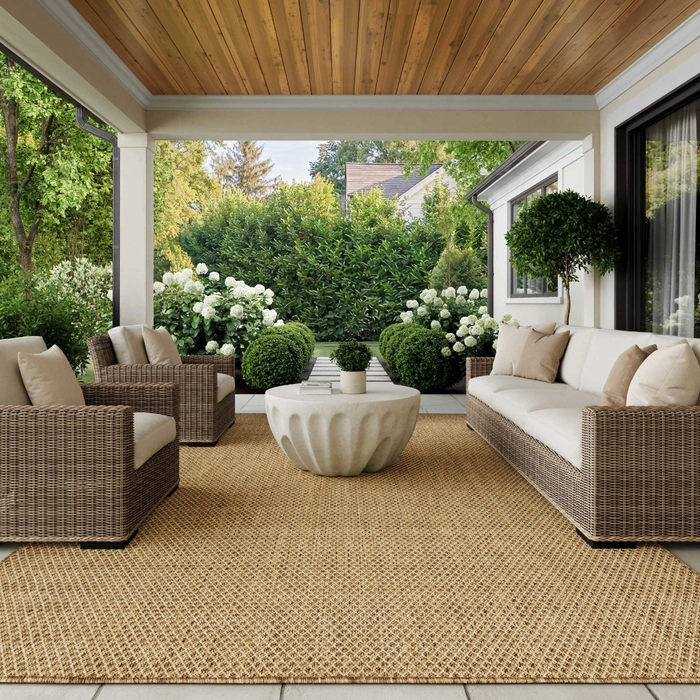
If you love the warm, natural-fiber look outdoors, polypropylene rugs woven to mimic the texture of jute or sisal are the correct choice. Modern performance weaves replicate the look convincingly, resist UV fading, handle moisture without damage, and can be rinsed off with a hose.
Can You Wash a Jute Rug? How to Clean a Jute Rug
You cannot machine wash or wet-clean a traditional jute rug. Full saturation will damage the fiber structure, cause the rug to shrink unevenly, leave water stains, and, in the worst cases, trigger mold growth in the backing.
That said, not every rug with jute in its composition follows the same rules. Nourison offers washable rugs that incorporate jute as part of a blended construction, engineered specifically to handle gentle machine washing. If your rug carries a washable designation, follow the care label on that specific product rather than the general jute guidelines below. The construction makes the difference.
For traditional jute and standard jute-blend rugs, cleaning correctly means one thing: address spills immediately and keep moisture minimal.
- For dry debris and regular dust: Vacuum with low suction, no beater bar, in the direction of the weave. Do this weekly in active rooms, every one to two weeks in lower-traffic areas.
- For liquid spills: Blot immediately with a clean, dry cloth. Do not rub. Press down firmly to absorb as much liquid as possible before it soaks through to the backing. Once the surface is blotted dry, let the area air out completely. Placing a fan nearby speeds that process significantly.
- For spot stains: A small amount of mild dish soap diluted in water, applied lightly with a barely damp cloth, can address most fresh stains. The key word is barely damp. Wet the cloth, wring it almost dry, then blot the stain, working from the outside edge inward. Let the area dry fully before walking on it again.
- For deep cleaning: Professional dry cleaning or low-moisture cleaning is the appropriate route when a jute rug needs more than spot treatment. Do not steam clean. Steam introduces sustained moisture at high temperature, which is the worst possible combination for jute fiber.
Where Do Jute Rugs Actually Work Best?
Given everything above, here is where jute performs well and where it does not.
Good fits:
- Living rooms with light-to-moderate foot traffic, away from direct sunlight that would fade the fiber
- Bedrooms, where traffic is low and moisture is not a factor
- Dining rooms under tables without chairs that drag heavily, or with a rug pad to reduce friction against the floor
- Home offices and reading rooms
- Layered under a smaller, softer rug in any room where bare-foot comfort is a priority
Poor fits:
- Entryways and mudrooms, where tracked-in moisture is inevitable
- Kitchens and bathrooms, where spills and humidity are part of daily life
- Covered patios and outdoor spaces, regardless of overhang protection
- Homes with young children or pets where spills are frequent and rugs need to be washed
- High-humidity climates without climate control, where ambient moisture alone can damage jute over time
A good rug pad is not optional with jute. Because jute is heavier than many synthetic rugs and tends to sit flat without grip, a non-slip pad prevents movement, protects the floor underneath, and adds a small amount of cushioning underfoot.
How to Choose: A Quick Checklist
Before you add a jute rug to your cart, run through these questions.
- Is the room dry year-round? If humidity or spills are a regular factor, consider a performance fiber alternative.
- Is traffic low to moderate? Entryways, kitchens, and dining rooms with active chair movement will wear jute faster than its construction supports.
- Are you comfortable with spot-clean-only care? If you need a rug you can pull up and wash, jute is not it.
- Do you have young children or pets? Honest answer needed here. Jute and frequent wet messes are a difficult combination.
- Are you buying it for texture and warmth, not just the look? Jute delivers on both when it is placed well. The look is achievable in other materials if the conditions do not favor natural fiber.
If you answer yes to the first two and accept the care limitations, jute is a beautiful, sustainable, and genuinely long-lasting choice.
FAQ
Q: Are jute rugs good for high-traffic areas?
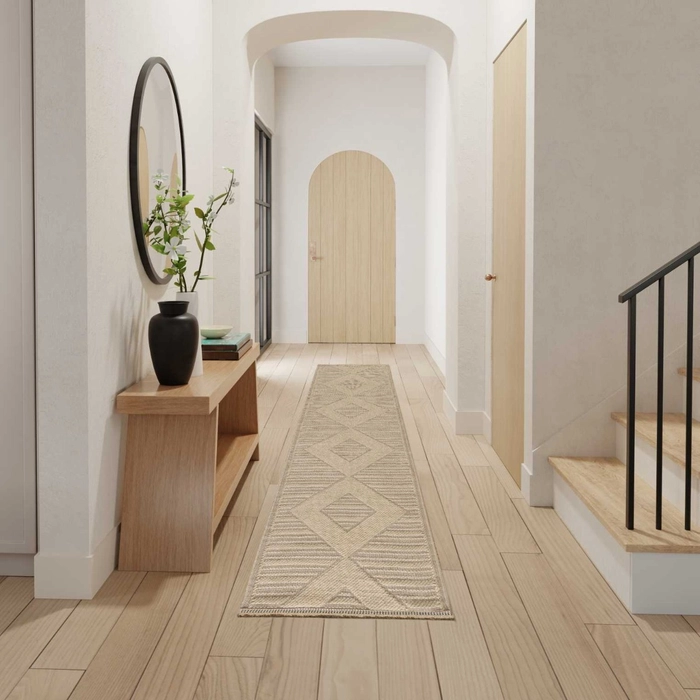
A: Jute handles moderate traffic well but is not recommended for high-traffic zones like entryways or hallways. The fiber breaks down faster under heavy, concentrated friction, and those areas are also more likely to introduce moisture. A flatweave wool or performance fiber rug is a more durable choice for those spaces.
Q: Why is my jute rug turning brown?
A: Browning is almost always moisture damage. When jute fibers absorb water and dry unevenly, they oxidize and discolor, leaving a brownish stain that does not come out with further cleaning. Prevent it by blotting spills immediately and keeping the rug in a dry environment. Once browning has set in, professional intervention is the only option, and results are not guaranteed.
Q: Do jute rugs smell?
A: New jute rugs sometimes have a mild earthy or grassy scent that comes from the natural fiber. It typically dissipates within one to two weeks of the rug being laid flat in a ventilated room. If the smell is stronger or develops after the rug has been in use, check for moisture trapped in the backing, which can cause a musty odor as the fibers begin to degrade.
Q: What is the difference between jute and sisal?
A: Both are natural plant fibers, but sisal is harder and more durable than jute. Sisal can handle more foot traffic and is slightly more moisture-resistant. Jute is softer and warmer in tone. If durability is your priority, sisal is the stronger choice. If texture and warmth matter more, jute wins.
Q: How long do jute rugs last?
A: In a dry, low-to-moderate traffic setting with proper care, a quality jute rug can last five to ten years before showing significant wear. In high-moisture or high-traffic conditions, that lifespan can be considerably shorter. Placement and care habits are the two biggest factors in longevity.